Beyond the Perimeter: Why Anti-Cut and Anti-Climb Fencing is the Gold Standard for High Security Infrastructure
Gurukrupa Security Team
Author
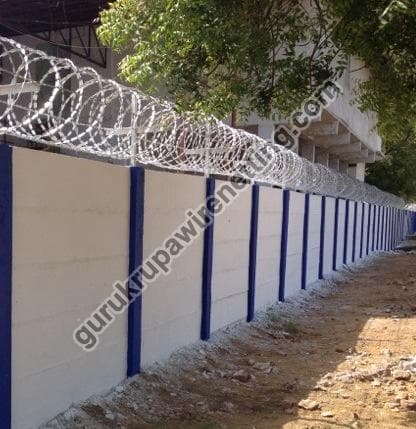
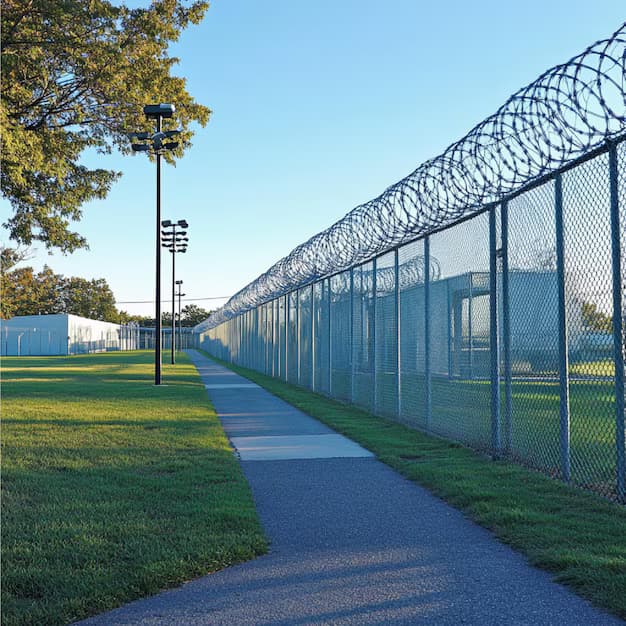
For the facility manager or owner of an industrial site, the perimeter is no longer simply a property line—it is the first, and perhaps most important, layer of a multi-tiered defence strategy.
As threats have evolved from simple trespassing to sophisticated industrial espionage and organized sabotage, the "standard" chain-link fence has become a liability. The industry has moved to a definitive solution for securing high-value assets: Anti-Cut and Anti-Climb (ACAC) fencing.
Here's why this infrastructure has become the gold standard for high-security environments.
The Psychology of Deterrence: Why "Good Enough" Isn't Enough
Security is as much about psychology as it is about physical barriers. A standard fence suggests a boundary; an anti-climb fence signals impenetrability.
Most intruders look for "soft targets." A traditional fence offers ample toeholds for climbing and can be breached in seconds with manual bolt cutters. When a bad actor encounters the dense, rigid profile of a high-security mesh, the "perceived effort" to breach increases exponentially. This psychological deterrent often stops an intrusion before it even begins.
Anatomy of the 358 Mesh Standard
In the high-security fencing world, the term 358 Mesh is king. The name is taken from the imperial measurements that give it technical superiority: 3" × 0.5" × 8 gauge.
Anti-Cut Openings
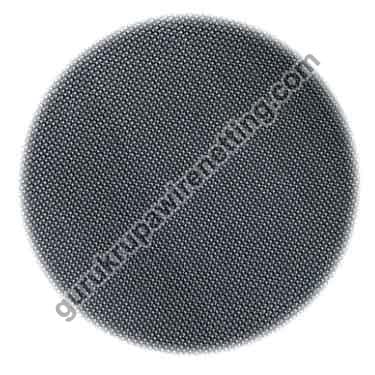
The screen openings are typically 76.2mm × 12.7mm. The gap is intentionally too small for the blades of normal bolt cutters or even the insertion of a crowbar. Manual cutting is almost impossible.
Anti-Climb Geometry
The spacing of the vertical wires makes it impossible to get a "finger-hold" or "toe-hold." Chain-link fencing is like a ladder, while 358 mesh creates a flat vertical plane that cannot be scaled.
Material Strength
These panels are made from high-tension 8-gauge steel, which is much more resistant to impact and torsion than woven types.
Comparative Analysis: Delay-Rated Fencing vs Conventional Solutions
| Feature | Chain Link | Expanded Metal | 358 Anti-Cut/Climb |
|---|---|---|---|
| Cut Resistance | Low (Seconds) | Moderate | High (Minutes/Power tools only) |
| Climb Difficulty | Low (Easy toeholds) | Moderate | High (No grip points) |
| CCTV Visibility | Moderate | Poor (Angle dependent) | Excellent (High transparency) |
| Service Life | 10–15 Years | 15–20 Years | 25+ Years (Galfan/Polymer coated) |
Surveillance Integration: The "See-Through" Advantage
A common mistake in high-security planning is opting for solid walls. While they prevent climbing, they create blind spots for your security team.
Anti-cut mesh is designed with high transparency. From a straight-on or angled perspective, the fence remains digitally transparent for CCTV cameras and thermal imaging sensors. This allows your Perimeter Intrusion Detection Systems (PIDS) to verify threats on the other side of the line before they even touch the fence.
Key Takeaway: High-security fencing is an investment in time. By eliminating the ability to climb or use manual cutting tools, you force intruders to use noisy power equipment, which triggers acoustic sensors and provides your response team the critical window needed to intercept.
Future-Proofing Your Perimeter
The cost of a breach—whether through theft of copper, damage to electrical grids, or data center infiltration—far outweighs the capital expenditure of a high-specification fence.
Modern anti-climb systems are now being paired with Galfan coatings (a 95% Zinc, 5% Aluminum alloy) to ensure that the infrastructure survives 20+ years in corrosive or coastal environments without losing structural integrity.
Is Your Perimeter a Deterrent or a Liability?
If you are still relying on legacy chain-link systems to protect critical infrastructure, you are operating on borrowed time. Audit your vulnerabilities today.
Anti-Cut and Anti-Climb fencing from Gurukrupa Wire Netting Industries provides the advanced protection your facility deserves—combining psychological deterrence, physical resilience, and seamless security integration.
Secure Your Perimeter Today
Contact our security fencing experts to assess your facility's vulnerabilities and design a comprehensive perimeter solution.
Tags:
About the Author
Gurukrupa Security Team is an expert contributor at Gurukrupa Wire Netting Industries, sharing insights about wire mesh, security fencing, and industrial solutions.